Buyer due diligence
What Buyers Should Know Before Sourcing a Padel Court from China
Sourcing a padel court from China involves metal fabrication, glass processing, surface treatment, packaging, and export workflows. It requires a defined specification, verified documents, local engineering coordination, and control through site acceptance. This guide presents a due-diligence approach based on published Valo Padel product information and manufacturing documentation; it is not project-specific legal, engineering, customs, or regulatory advice.
On this page
- Define the scope before requesting quotations
- Verify the manufacturer and production route
- Review the product specification consistently
- Read glass documents by their actual scope
- Agree inspection and acceptance criteria
- Plan export packaging and receiving
- Put commercial and technical boundaries in the contract
Define the scope before requesting quotations
Quotations are difficult to compare when suppliers receive different or incomplete briefs. Start with a written request that describes the project rather than asking for a court price without context.
Include:
- project country and site location;
- club, resort, development, public facility, rooftop, indoor, outdoor, or multi-court use;
- preferred model or structural category;
- court quantity and anticipated phasing;
- available footprint, clear height, access, and storage conditions;
- local climate and exposure information for engineering review;
- expected division of installation responsibilities;
- frame finish, turf, lighting, doors, net, and accessory requirements;
- documentation needed by the buyer, contractor, engineer, insurer, or authority;
- receiving constraints and target project programme.
A target programme supports planning but is not a fixed lead-time claim. Ask suppliers to identify dependencies, approvals, inspections, dispatch conditions, and transport scope.
Request a controlled technical package
Ask for current documents with model names, drawing numbers, revision dates, and approval status. The package may include a general arrangement, elevations, component drawings, base details, glass schedule, bill of materials, finish schedule, electrical information, packing list, and installation method.
Avoid approving a court from a mixed set of drawings or images that refer to different models. This is particularly important where structural categories differ. Infinite View is the confirmed no-corner-post Valo system, while Signature Panoramic, Heritage Classic, and Sovereign Freestanding retain corner-column structures.
Verify the manufacturer and production route
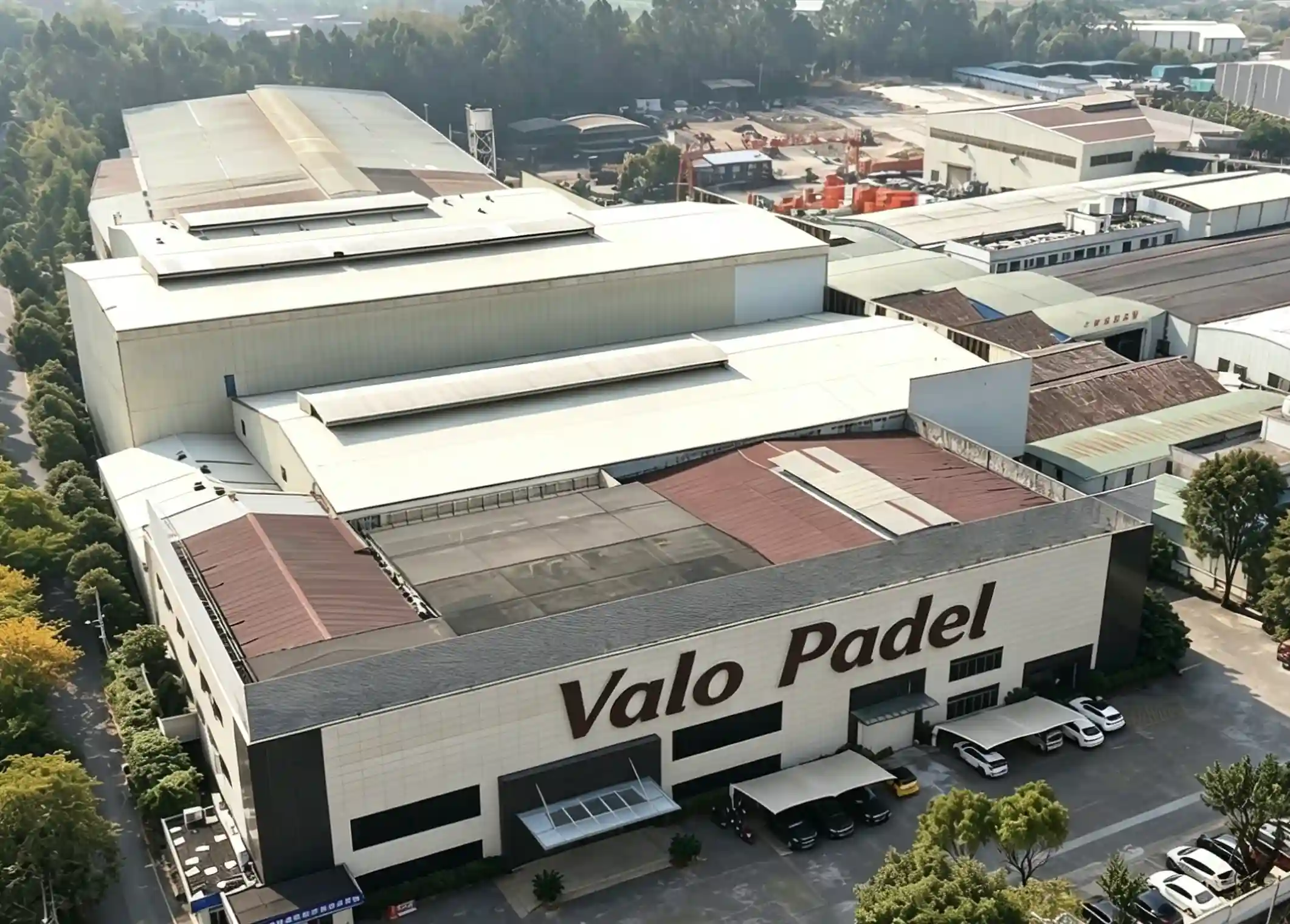
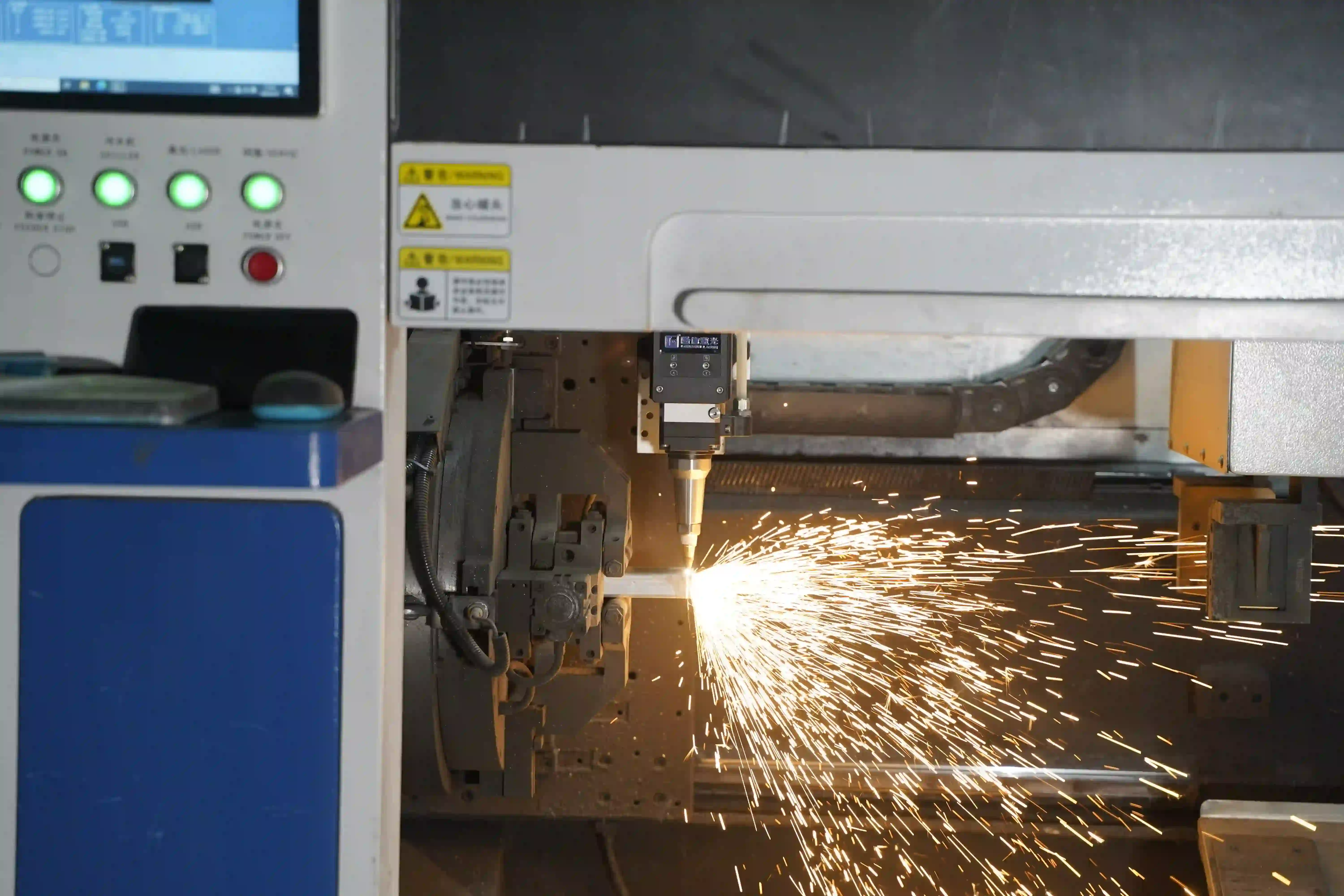
Manufacturing photography shows a factory exterior, CNC laser cutting, manual and robotic welding, grinding, hand polishing, powder-coating equipment, and spray guns. These images explain a production route but do not establish the specification or inspection outcome of an order; verification must connect visuals to controlled records.
Raw materials and traceability
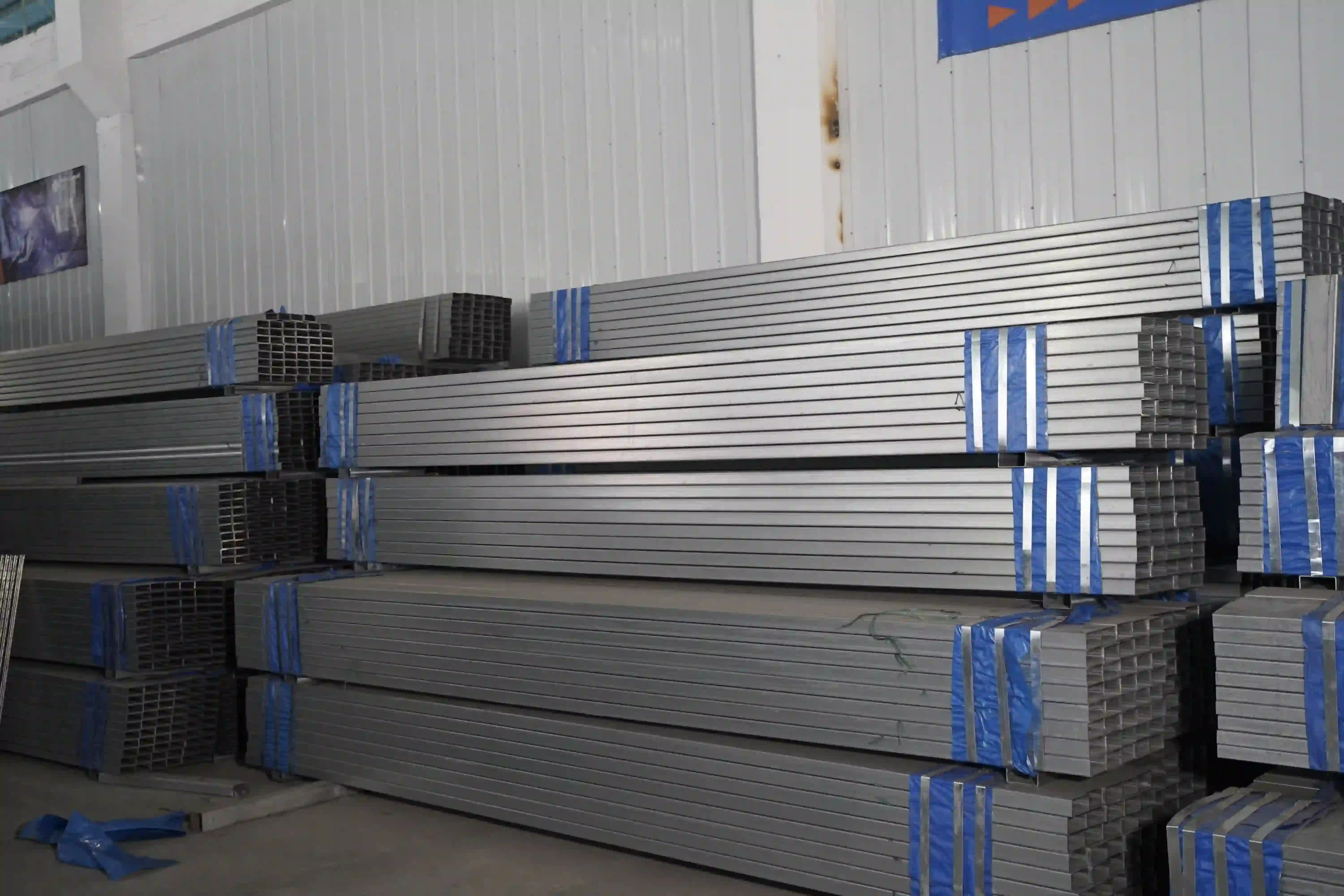
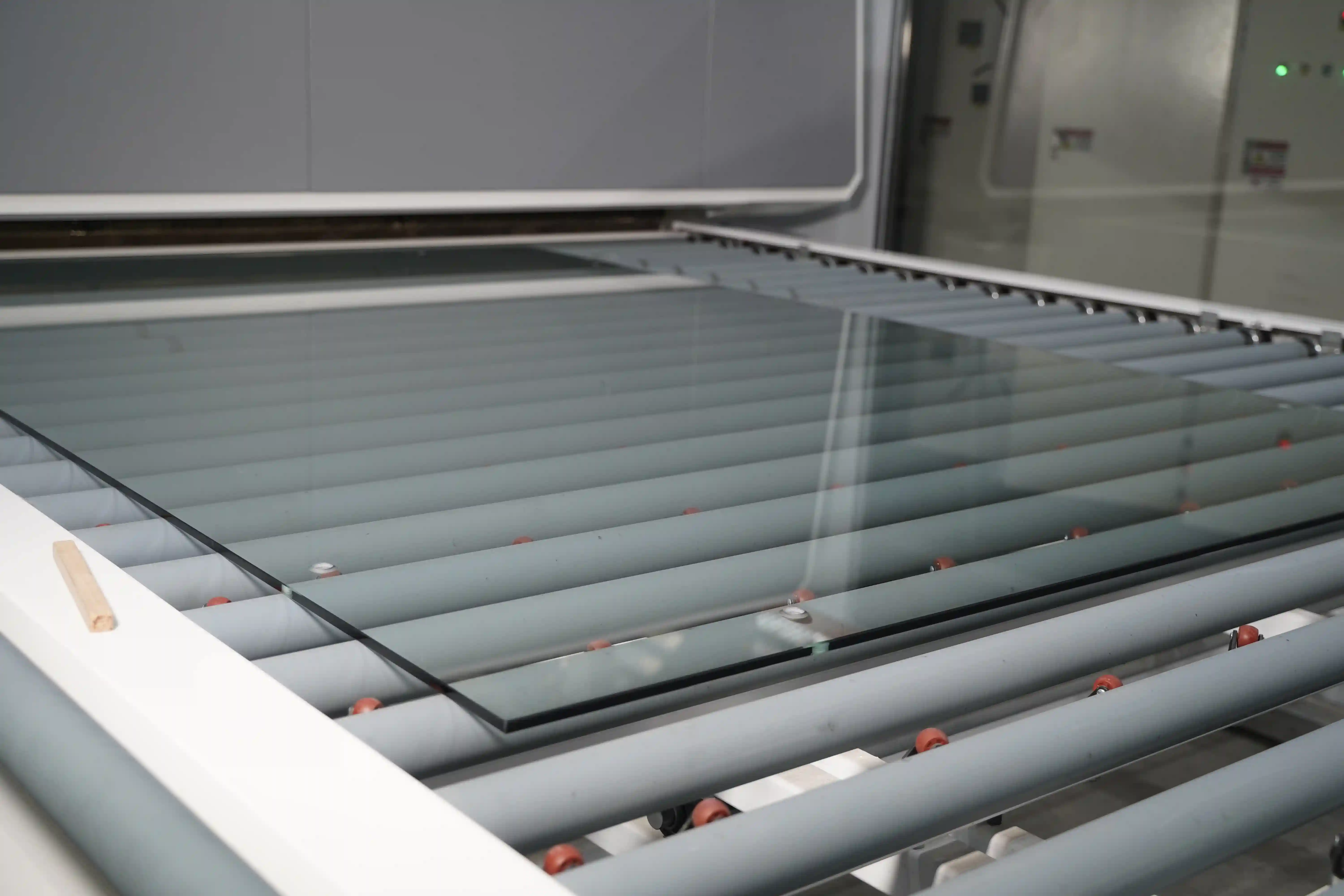
Manufacturing images include bundled rectangular steel profiles and stored glass panels. Published product information identifies Q235 galvanized steel. For an order, the governing evidence should be the agreed specification, purchase records, mill documentation, batch identification, and incoming inspection records.
Traceability should identify the applicable specification, material batch, controlling drawing revision, agreed substitutions, and order-specific inspection record. The same principle applies to glass, fasteners, mesh, turf, lighting, and coatings.
Cutting, welding, and finishing
CNC equipment can support repeatable cutting, while fixtures and robotic welding can support a controlled fabrication process. Manual welding remains relevant for many assemblies and details. Grinding and hand finishing can prepare joints and surfaces for later treatment.
Do not infer weld penetration, structural capacity, or compliance from a photograph. If welding is material to the design, request the drawing requirements, fabrication procedure, inspection points, acceptance criteria, and records relevant to the order.
The published Valo Padel specifications identify Q235 hot-dip galvanized steel and an electrostatic polyester powder-coating process. Manufacturing images show coating-line equipment and spray guns. For a project, confirm the agreed preparation and coating sequence, colour, repair method, handling controls, inspection criteria, and environmental suitability.
Review the product specification consistently
The four Valo Padel model pages each list 18 panels of 12 mm tempered safety glass. They also list Q235 hot-dip galvanized steel mesh with a 50 × 50 mm aperture and 4.0 mm wire diameter. These confirmed entries can form part of a comparison schedule.
Model-specific structure still matters:
- Signature Panoramic lists 100 × 100 × 3.0 mm corner columns and 100 × 50 × 3.0 mm side columns.
- Infinite View is the no-corner-post system and lists 100 × 50 × 3.0 mm columns and crossbars for its super-panoramic arrangement.
- Heritage Classic lists 100 × 100 × 3.0 mm corner columns and 100 × 50 × 3.0 mm side columns.
- Sovereign Freestanding lists corner and side columns together with 24 freestanding outriggers.
Sovereign's outrigger approach is intended to distribute load externally and may permit limited ground intervention when site conditions allow. It is not a universal foundation exemption. Building capacity, support conditions, waterproofing, movement, exposure, local rules, and engineering review remain project matters.
Read glass documents by their actual scope
Glass documents are often misunderstood during international sourcing. A certificate or licence may apply to a named manufacturer, product family, thickness range, process, standard, site, and validity period. It does not automatically apply to every glass panel offered by a trading party, and it does not approve a complete sports facility.
Chinese compulsory product certificate
Certificate number 2024051302046750 names Foshan Xinbo Glass Co., Ltd. It covers ordinary tempered architectural glass with nominal thickness greater than 6 mm and up to 12 mm under GB 15763.2-2005 and the cited compulsory safety-glass certification rules. It was issued on 26 July 2024 and states validity through 25 July 2029. Its attachment lists entries for 8 mm, 10 mm, and 12 mm glass.
This is relevant component information. A buyer should still confirm that the proposed glass comes from the named manufacturer, falls within the stated product scope, remains covered at the relevant time, and satisfies destination requirements.
AS/NZS 2208 StandardsMark licence
SAI Global StandardsMark Licence SMK41292 names Foshan Yichuang Glass Products Co., LTD. It covers listed safety-glazing products manufactured to AS/NZS 2208:1996. It was issued on 29 June 2022 and states an expiry date of 28 June 2027.
Again, the licence concerns listed glass products. It is not certification of a complete padel court, steel frame, foundation, installation, wind design, or finished project.
Match documents to the purchase order
For each glass document, check the legal manufacturer name, production address, product description, thickness, model or schedule, standard, issue and expiry dates, and any attachment. Record which proposed court panels the document is intended to support. If the connection cannot be demonstrated, treat the document as background information rather than order evidence.
Agree inspection and acceptance criteria
Inspection becomes more useful when the buyer defines measurable points before production. The plan can distinguish incoming materials, first-article checks, in-process checks, pre-packing inspection, and document review.
Depending on the agreed specification, checkpoints may include:
- profile dimensions and wall thickness;
- cut lengths, hole locations, plates, and connection geometry;
- weld appearance and specified inspection records;
- surface preparation, coating colour, coverage, and repair areas;
- mesh dimensions and frame fit;
- glass identification, dimensions, edges, holes, and visible condition;
- hardware quantities and labels;
- trial fit or assembly checks where agreed;
- packing-list reconciliation and package identification.
Photographs can support an inspection record, but they should be tied to an order, date, component, and acceptance result. Generic factory images are useful for explanation, not final acceptance.
Plan export packaging and receiving
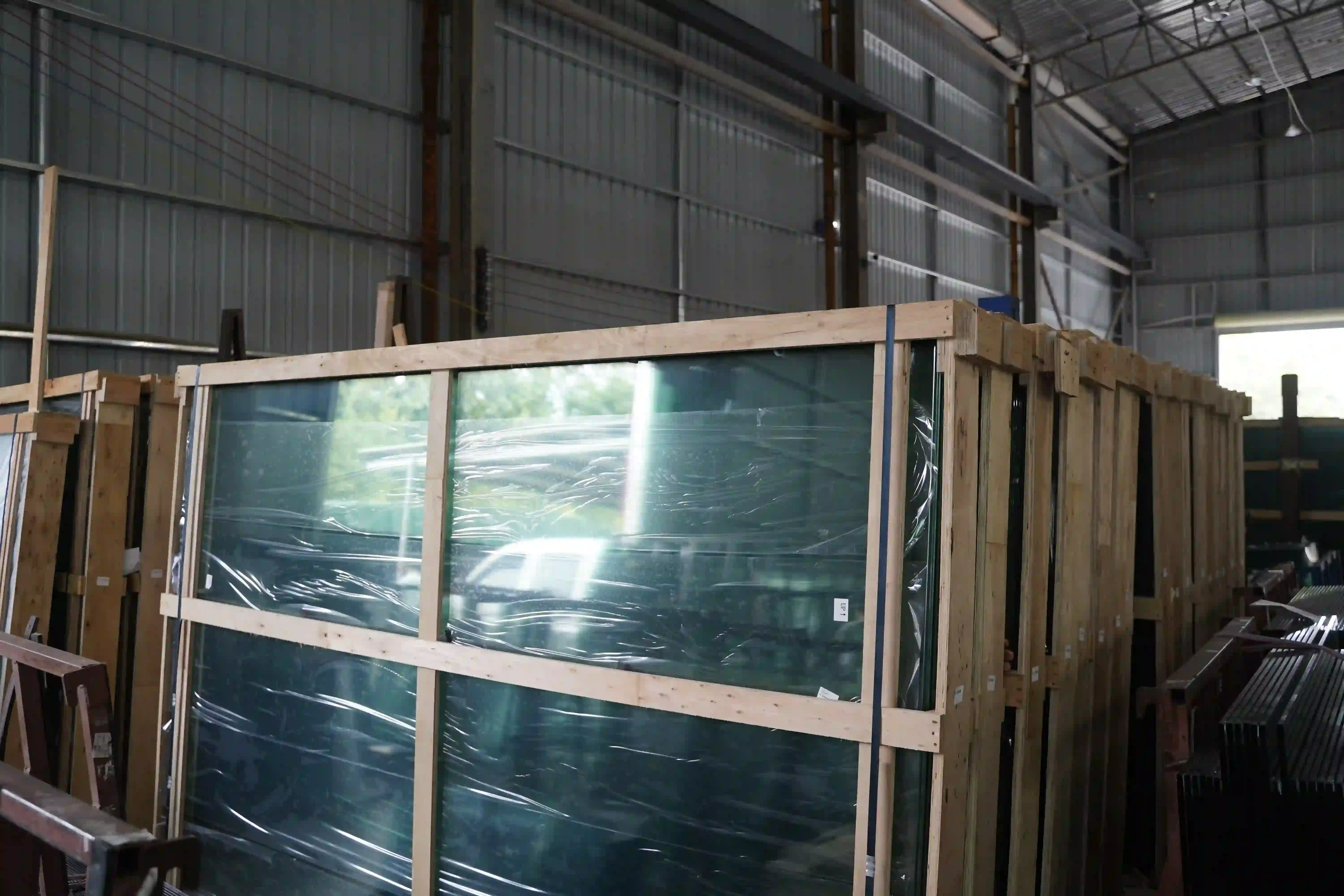
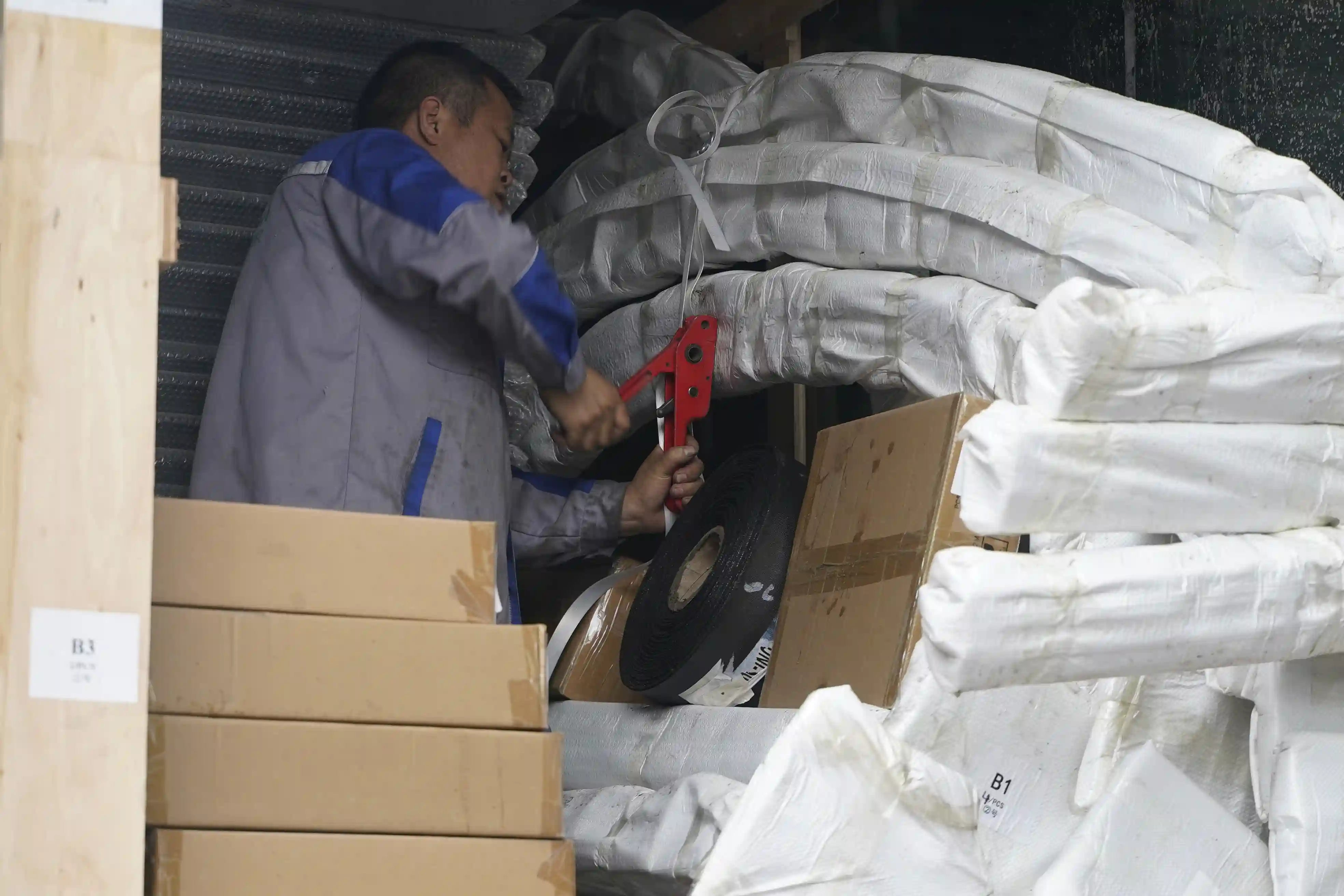
Manufacturing and logistics images show wooden frames and crates for glass, wrapped steel components, hardware in wooden boxes, loading at a factory, and components secured inside a container. These images support a discussion about handling stages without establishing a fixed packing specification for every order.
Request a project packing plan that identifies:
- package contents, dimensions, weights, and identification marks;
- glass orientation, internal cushioning, restraint, and handling points;
- protection for coated steel and vulnerable edges;
- hardware grouping and labels linked to the bill of materials;
- loading sequence and unloading sequence;
- equipment required at destination;
- storage limits and protection before installation;
- the process for recording visible transport damage.
Container capacity should be confirmed for the selected model, quantity, accessories, packing arrangement, and current shipment. Do not rely on a generic figure when preparing freight, site access, or unloading plans.
Put commercial and technical boundaries in the contract
The contract should identify the model, drawing revisions, specifications, finishes, inspections, documents, packing, delivery and installation scope, acceptance process, replacement-parts process, and change control.
Ask for written terms rather than assuming a warranty period, delivery date, approval outcome, spare-parts policy, or performance level. Buyers should also obtain appropriate advice on import rules, construction approvals, insurance, and local professional responsibilities.
Frequently asked questions
What documents should a buyer request from a Chinese padel court supplier?
Request current model drawings, a bill of materials, component specifications, inspection criteria, packing information, installation scope, and documents relevant to the named products and destination. Each document should identify its revision or validity where applicable.
Does a tempered-glass certificate cover the complete padel court?
No. It applies to the glass products described within its scope. It does not certify the court frame, foundation, installation, wind design, or finished facility.
Can a buyer confirm Q235 steel from a factory photograph?
No. A photograph can show stored steel profiles, but grade and coating should be confirmed through the agreed specification, material records, traceability, and inspection evidence for the order.
Is Sovereign Freestanding suitable without foundations at every site?
No. Its outrigger system may allow limited ground intervention where site conditions permit. The support strategy remains subject to the building or ground conditions, local regulations, and qualified engineering review.
How should buyers evaluate export packaging?
Review a project-specific packing plan covering glass protection, coated-steel protection, hardware identification, package sizes and weights, loading sequence, unloading equipment, storage, and damage reporting.
Discuss the project scope.
If you are preparing an international padel court RFQ, share the project location, site conditions, preferred models, quantity, installation scope, required documents, and receiving constraints through the Contact page. Valo Padel can respond to that defined scope and identify points that require local professional or engineering review.